
Symptom guide · noise
Why your Sub-Zero is making noise — and which sounds matter
A built-in is not silent, and inland heat makes it run harder and longer than most owners expect. Here is how to tell a normal working sound from one that needs attention, how to locate where it is coming from, and when to call a Gilroy specialist.
$89 service call, waived when you book the repair · 365-day warranty on all labor.
Quick answer
A new noise on a Sub-Zero is usually a fan or airflow problem, not a dying compressor. A buzz or rattle from the top grille is most often the condenser fan loaded with dust; a whir or chirp that changes when you open a door is the evaporator fan; a steady low hum is the compressor working normally, especially through a hot inland afternoon. Clean the condenser, confirm nothing is vibrating loose, and note when the sound happens. If a rattle, squeal or loud buzz persists, book a diagnosis — a flat $89 service call that comes off the bill once you book the repair.
Normal working sounds vs. ones to act on
A built-in makes plenty of healthy noise. Sort what you are hearing before you assume the worst.
| Sound | Normal or not | What it usually is |
|---|---|---|
| Steady low hum during cooling | Normal | The compressor running — louder and longer on hot Gilroy afternoons, which is expected, not a fault. |
| Gurgling or trickling after a cycle | Normal | Refrigerant settling and meltwater moving in the defrost cycle — a healthy sound. |
| Occasional clicks at start and stop | Usually normal | The start relay and controls switching; a single click each cycle is fine, repeated rapid clicking is not. |
| Persistent buzz or rattle from the top grille | Act on it | A condenser fan loaded with dust, or a blade catching — clean first, then book if it stays. |
| Squeal, grind or loud whir inside | Act on it | A worn evaporator fan motor or bearing in one compartment — a technician part, inexpensive to diagnose. |
| Loud knocking or repeated rapid clicking with no cooling | Act now | A compressor start fault or failing motor — switch off at the breaker and call. |
Sounds are typical for Gilroy built-ins; your unit may differ. We confirm the source by listening and testing before any part is replaced.
The inland heat and dust angle
Why South County units get noisy in summer
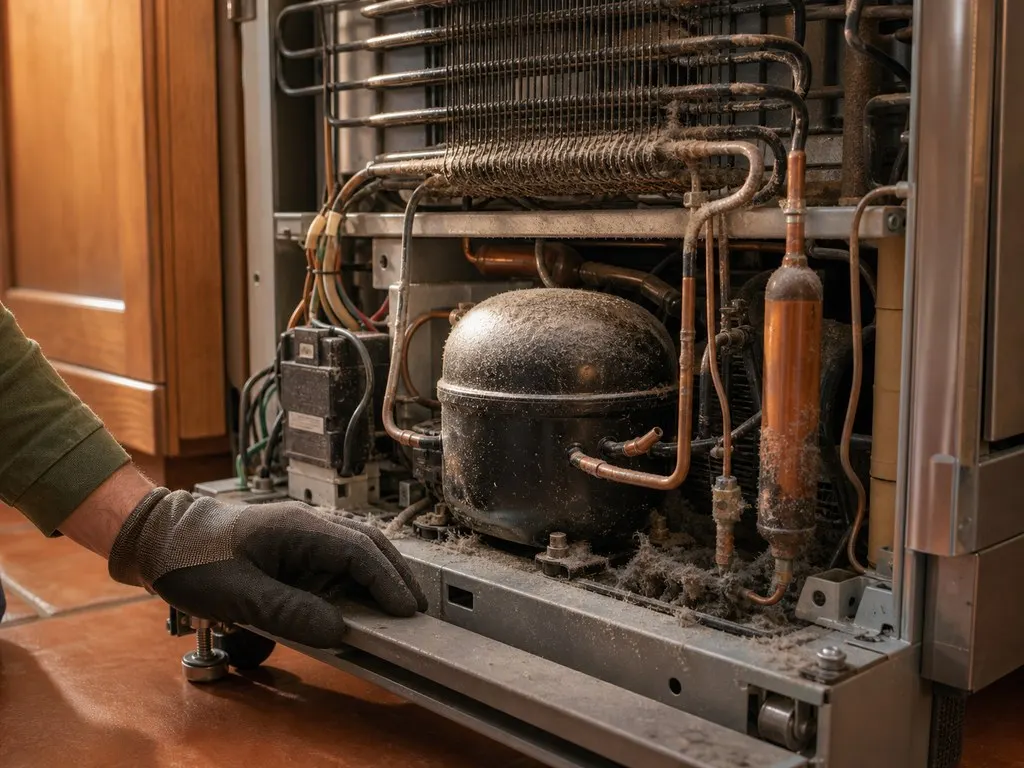
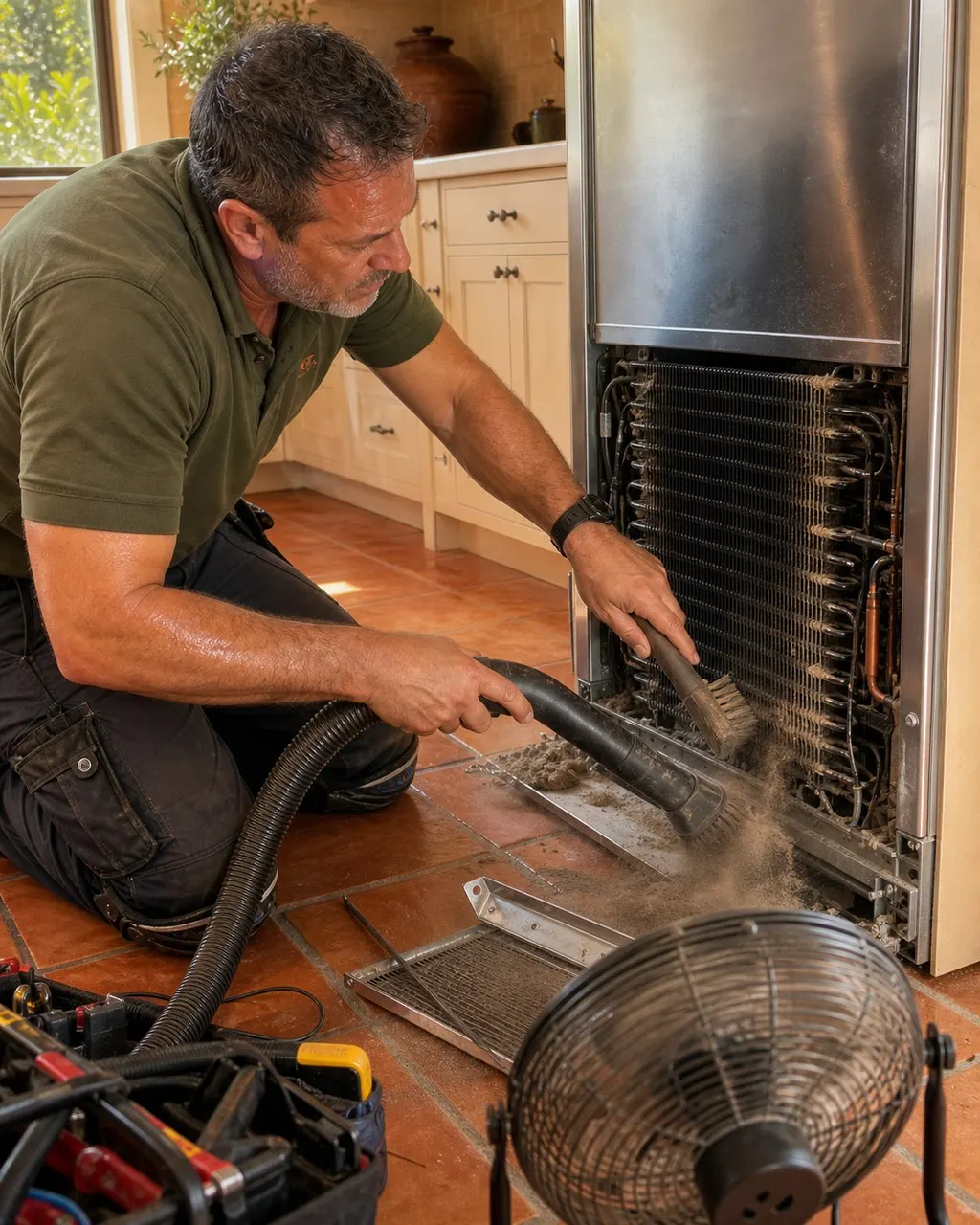
The most common noise call we get here is a built-in that buzzes and runs almost nonstop from June through September, and the cause is usually the same: a condenser packed with the fine dust that hangs in South County air. Gilroy sits among working garlic and row-crop fields, long gravel driveways out toward San Martin throw grit, and the hot, still afternoons let it settle into the coil behind the top grille. A loaded condenser cannot shed heat, so the fan spins against a clogged blade and the compressor runs long and loud trying to keep up.
It is worse on the units that work hardest. A wine column in an Eagle Ridge estate, west-facing into the afternoon sun, can run nearly continuously on a 100-degree day, so a marginal fan bearing or a dusty coil announces itself as a constant drone. The fix is rarely dramatic — a proper condenser clean and a fan check often restore a quiet unit. When heat is the underlying driver, the full story is on our summer heat and sealed system page.
- Garlic-field and gravel-driveway dust loads the condenser fan
- West-facing estate kitchens drive near-continuous summer runtime
- Hard-working wine columns show a bad bearing as a constant drone
- Genuine OEM fan motors and parts with a 365-day labor warranty
How it works
How to locate the noise
Five steps to pin down where the sound is coming from before we arrive. Only the last leaves your hands.
- 1
Note the timing
Is it constant, only during cooling, or only when the ice maker or fans run? Timing points at the part.
- 2
Listen at the top grille
Most mechanical noise lives behind the upper grille — the condenser fan and compressor.
- 3
Open a door
A sound that changes or stops with the door open is usually the evaporator fan in that compartment.
- 4
Check for loose parts
Confirm the grille is clipped in and nothing beside or on top of the unit is buzzing against the cabinet.
- 5
Vacuum the condenser
A dust-loaded condenser fan buzzes and runs long — clearing it is the safe step that often quiets the unit.
Match the noise to the likely part
A rough guide to which sound points at which component, and how urgently to act.
| Noise type | Likely part | Urgency |
|---|---|---|
| Buzz or rattle from the top | Condenser fan blade or motor, often dust-loaded | Clean first; book this week if it persists. |
| Whir, squeal or chirp inside | Evaporator fan motor or a worn bearing | Soon — a failing fan can cut cold airflow to the compartment. |
| Steady loud hum that never eases | Compressor running long against a hot, clogged condenser | Clean the condenser; book if it still will not cycle off. |
| Rapid repeated clicking, no cooling | Start relay or overload, or a failing compressor | Act now — switch off at the breaker and call. |
| Knocking or vibration against cabinetry | A unit out of level or a loose grille or panel | Routine — re-seat the grille and check leveling. |
When a sound comes with a warm compartment or no cooling, treat it as urgent and call (650) 668-1172.
Quick answers
Noisy Sub-Zero — quick answers
Is a loud hum the compressor dying?
Usually not. A steady hum is the compressor working — often long and loud on hot days. Worry about rapid clicking or knocking with no cooling, not a normal hum.
Why louder in summer?
Heat and dust make the condenser fan and compressor run longer and harder. A condenser clean and airflow check often quiets a unit that buzzes all summer.
What does it cost?
Diagnosis is a flat $89 service call, waived with the repair; a fan motor or bearing typically lands in the lower-to-mid hundreds.
Can I keep using it?
If it is still cold and the noise is a hum or occasional click, yes. If a fan is squealing or it clicks rapidly with no cold, book promptly before a compartment warms.
Reviews
Noise and fan repairs across South County
Big estate kitchen, west-facing, and the built-in just couldn’t keep up during the heat wave. They cleaned a badly clogged condenser and checked the sealed-system pressures properly. Runs quiet and cold now. Honest about what was and wasn’t worth doing.
Finally a Sub-Zero specialist who actually works in South County instead of treating Gilroy as an afterthought. Clear quote, genuine parts, and the 365-day labor warranty gave me real peace of mind on a pricey repair.
My Sub-Zero kept short-cycling and the temperature alarm wouldn’t stop. The tech showed me the airflow problem and the worn gasket on the door, fixed both, and walked me through how to keep it from happening again.
Older Classic-series built-in with the dual compressors. The tech clearly knew this generation inside out — sorted the defrost issue and replaced the gasket. Respectful of an older unit instead of pushing a new one.
FAQ
Noisy Sub-Zero — FAQ
Why is my Sub-Zero suddenly so loud?
What does a normal Sub-Zero sound like?
Why does my Sub-Zero run constantly and hum all summer?
Is a buzzing or clicking Sub-Zero dangerous?
Why is the noise coming from inside the fridge, not the back?
Can a wine unit be noisier than a refrigerator?
How fast can you diagnose a noisy Sub-Zero in Gilroy?
Related Sub-Zero help

New buzz, rattle or squeal? Let us find which fan it is.
Book a Sub-Zero noise diagnosis with a local South County specialist — the $89 service call is waived when you book the repair.
$89 service call, waived when you book the repair · 365-day warranty on all labor.