
Gilroy sits inland at the south end of Santa Clara County, and our summers behave nothing like the foggy kitchens up the Peninsula. A run of 100°F-plus afternoons through July and August is normal here, and the valley air carries fine agricultural dust off the surrounding fields and orchards.
Those two facts — real heat and real dust — decide how a built-in Sub-Zero ages in Gilroy, Morgan Hill and San Martin. Almost every summer service call we make in South County traces back to one of them.
Heat changes the math on the condenser
A built-in Sub-Zero sheds heat by pulling room air across its condenser coil. The hotter the kitchen, the harder that job gets. On a 102°F Gilroy afternoon the unit has to dump heat into air that is already warm, so the compressor runs longer cycles and works closer to its limit than it ever does in a coastal town.
That is fine for a clean, healthy unit. It is not fine for one that has been quietly neglected — and summer is exactly when a marginal sealed system finally shows itself.
Why South County dust is the real culprit
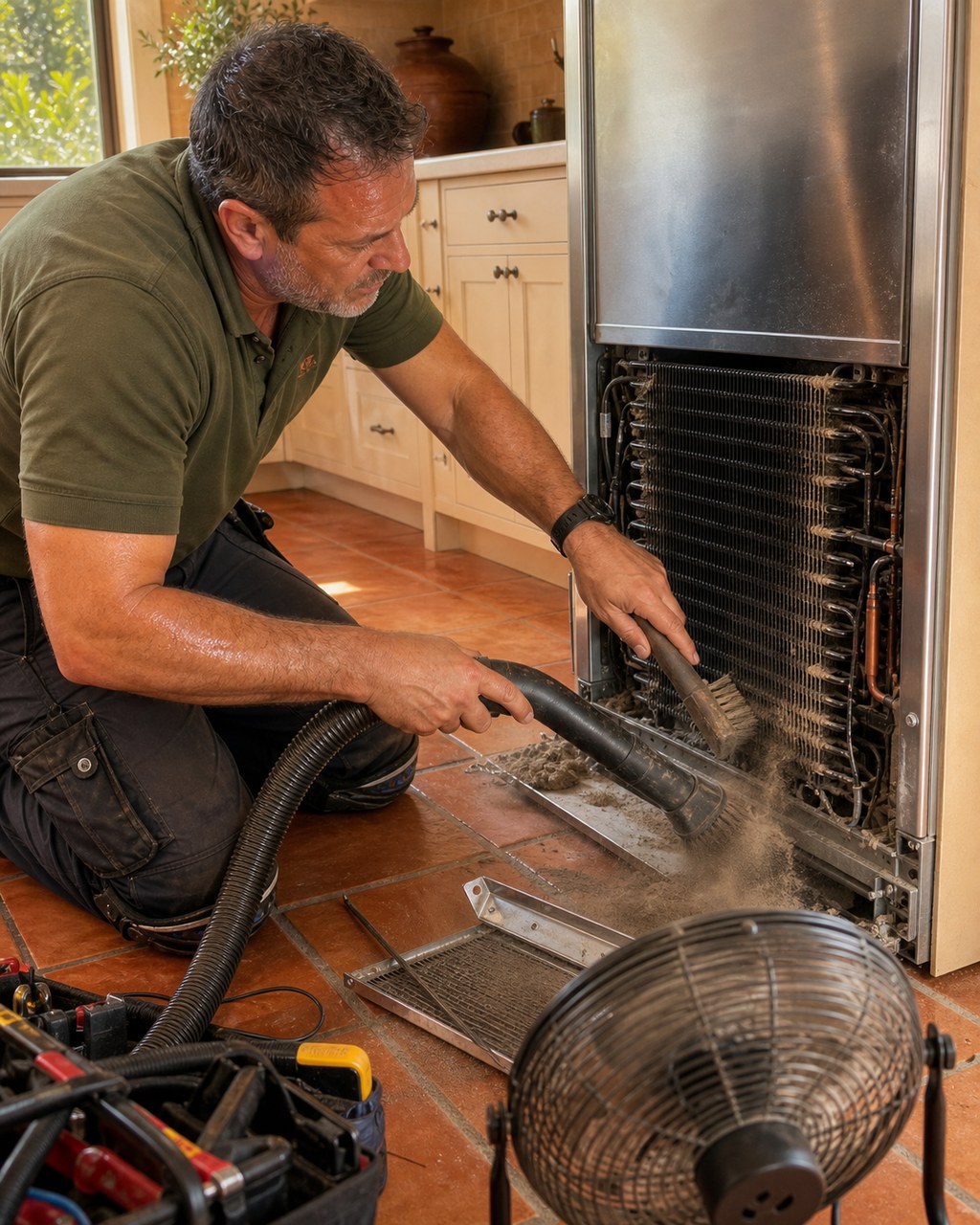
The heat alone rarely kills a Sub-Zero. The combination of heat and a dust-choked condenser does. Field and road dust drifts into garages and through kitchen vents all season, and it settles on the condenser coil and grille faster here than in a sealed suburban kitchen.
Once that coil is caked, the unit can no longer shed heat efficiently. The compressor runs hot and long, the fresh-food compartment starts drifting up a few degrees on the worst afternoons, and over a couple of summers that strain is what invites an expensive sealed-system repair.
The pre-summer routine that prevents most of it
The single highest-value thing a South County owner can do is have the condenser cleaned before the first heat wave, not after the unit struggles. A clean coil, a quick gasket check and confirming the grille airflow is clear keeps the compressor running cool through the worst weeks of the year.
If your built-in already loses ground on hot afternoons, that is worth a look before it becomes a sealed-system call. We dispatch across Gilroy, Morgan Hill and San Martin, and the $89 service call is waived when you book the repair. Book online or call and we'll route a visit on our next pass through your area.