
Care · maintenance
Sub-Zero maintenance & cleaning — the at-home fundamentals
The handful of cleaning and upkeep tasks that keep a Sub-Zero built-in cold, quiet and reliable — what to clean, what to leave alone, and how often, written for a South County kitchen.
$89 service call, waived when you book the repair · 365-day warranty on all labor.
Quick answer
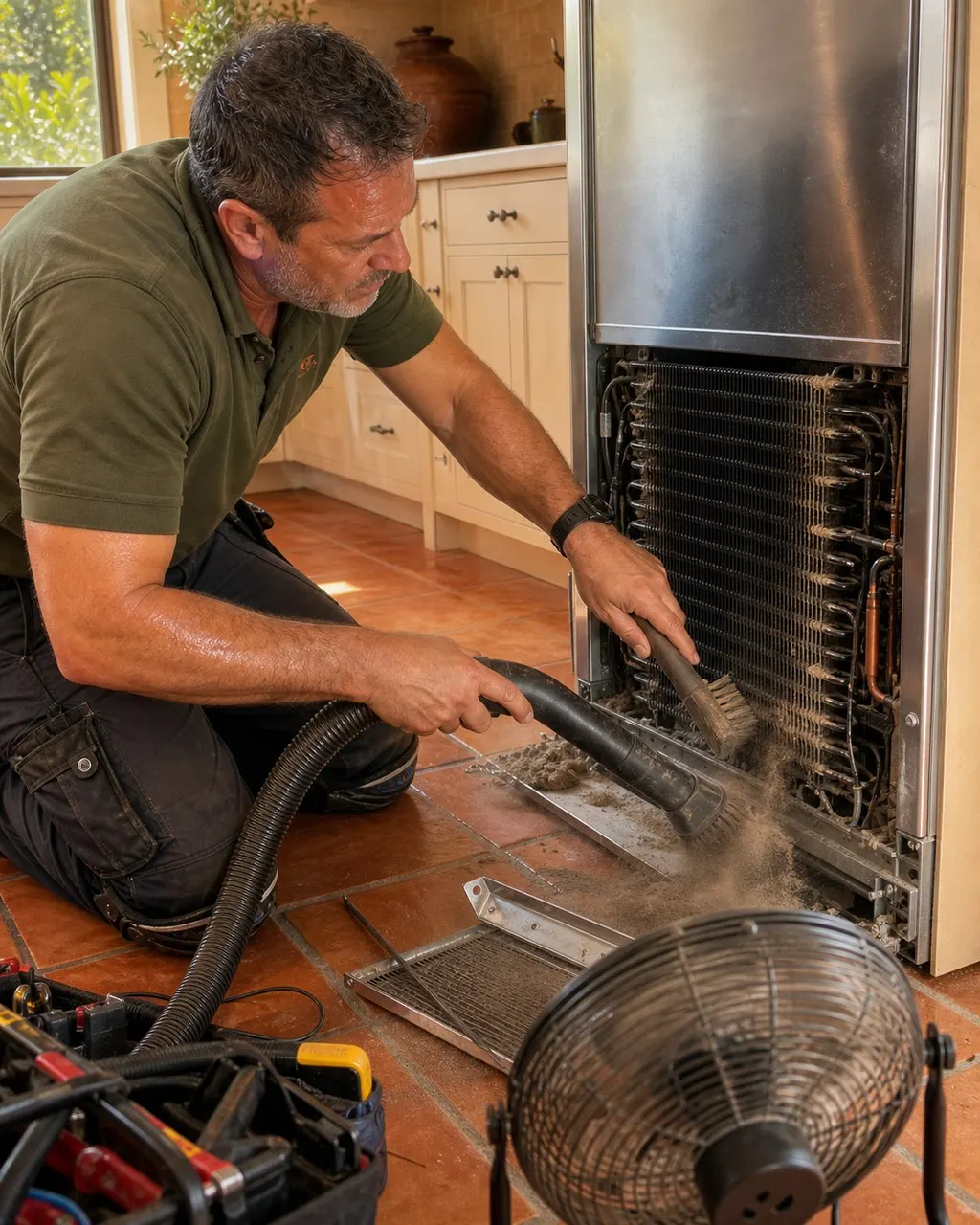
Sub-Zero maintenance comes down to a few simple jobs: vacuum the condenser and air grille every few months, wash the door gaskets and check them for tears, wipe the interior with mild soapy water (never harsh chemicals), change the water filter every 6–12 months, and keep the drain clear and the unit level. Done regularly, these keep a built-in cold and quiet. If it still runs warm or noisy afterward, book a diagnosis — the $89 service call is waived when you book the repair.
Your Sub-Zero maintenance schedule
The core at-home tasks, the tools they need, and how often to do them in a Gilroy kitchen.
| Task | Tools you need | How often |
|---|---|---|
| Vacuum the condenser coil | Vacuum with brush head, soft fin brush, flashlight | Every 3–4 months; monthly during summer heat |
| Clean the air grille | Vacuum, damp cloth, mild soap | Every 3–4 months, with the condenser |
| Wash & inspect door gaskets | Warm soapy water, soft cloth | Every 2–3 months; inspect for tears each time |
| Wipe the interior | Warm water, mild dish soap or baking soda, soft cloth | Monthly, or after any spill |
| Clear the defrost drain | Warm water, turkey baster or soft tubing | Twice a year, or if you see water pooling |
| Replace the water filter | Genuine OEM Sub-Zero filter | Every 6–12 months or when prompted |
| Check leveling & door seal | Level, adjustable wrench | Once or twice a year |
Frequencies are a sensible baseline for dusty inland South County air; pets, remodels and west-facing kitchens push the condenser cleaning toward the more frequent end.
What to clean each surface with — and what to avoid
Sub-Zero finishes and seals are fussy. Match the surface to a safe cleaner and skip the ones that damage stainless, plastic and gaskets.
| Surface | Use | Avoid |
|---|---|---|
| Interior walls & shelves | Warm water with mild dish soap, or a baking-soda solution for odors | Bleach, ammonia, scouring powder, abrasive pads |
| Stainless exterior | Soft damp cloth, then a stainless cleaner wiped with the grain | Citrus or solvent cleaners, steel wool, anything gritty |
| Door gaskets | Warm soapy water on a soft cloth, dried fully | Petroleum products, harsh degreasers that dry the rubber |
| Condenser coil & grille | Vacuum with a brush head and a soft fin brush | Water, sprays or wet cloths on the coil |
| Glass shelves & bins | Mild soapy water at room temperature | Hot water on cold glass — thermal shock can crack it |
When in doubt, plain warm water and a soft cloth is always safe. Harsh chemicals are the quiet cause of cracked seals and dulled stainless we see in older units.
Why the condenser is the one job that matters most
If you only do one thing on this list, keep the condenser clean. On a Sub-Zero built-in the condenser sits behind the grille at the top of the unit, and its job is to shed the heat the system pulls out of your food. When dust, lint and pet hair pack the fins, the unit cannot dump that heat — so it runs longer, runs warmer, and works the compressor harder than it should.
That matters more here than in many places. Gilroy summers are hot and dusty, long rural driveways off Hecker Pass and out toward San Martin throw fine grit into the air, and big west-facing estate kitchens around Eagle Ridge and Glen Loma load the system on the hottest afternoons. A condenser that would last six months between cleanings in a coastal town often needs attention every couple of months out here. A clean coil is the cheapest performance upgrade your built-in will ever get — and it directly extends how long the unit really lasts.
The pre-summer condenser clean is the one to book
If you do one piece of seasonal maintenance, do the condenser clean in late spring before the first heat wave. South County summers arrive fast and hot, and a coil that coasted through the mild months can be choked with field and driveway dust by July. Getting ahead of it means the unit goes into the hottest weeks with a clean coil and good airflow, so it cycles normally instead of running long and straining the compressor on 100-degree afternoons.
It also heads off the most common summer complaint we hear: a built-in that suddenly buzzes or runs noisily because the condenser fan is fighting a dust-packed blade. A pre-summer clean usually quiets that before it starts. For the climate-specific habits that matter most in our inland heat, pair this with our California heat maintenance guide — together they are what let a unit reach the 20-plus-year mark out here.
How it works
How to clean and maintain your Sub-Zero, step by step
Seven at-home tasks, in the order we would do them. No tools beyond a vacuum, a soft brush and mild soap.
- 1
Clean the condenser
Lift off the top grille, vacuum the coil, and brush dust from the fins in the direction they run so you do not bend them.
- 2
Wipe the air grille
Vacuum the louvers and wipe them clean so the condenser can pull air freely — a blocked grille is a top cause of warm running.
- 3
Wash the door gaskets
Clean the magnetic seals with warm soapy water, dry them, and check the whole perimeter for tears, gaps or hardened spots.
- 4
Clean the interior
Wipe shelves and walls with warm water and a little mild dish soap or baking soda — never bleach, ammonia, solvents or abrasive pads.
- 5
Clear the drain
On models with a defrost drain, confirm it is open so meltwater drains away instead of pooling or freezing in the bottom.
- 6
Change the water filter
Swap in a genuine OEM filter every 6–12 months and flush a few quarts through the dispenser to clear air and carbon fines.
- 7
Check leveling & seal
Make sure the unit is level and the doors self-close and seal evenly; a settled cabinet can stop the doors sealing properly.
Quick answers
Sub-Zero maintenance — quick answers
How do I clean the condenser?
Lift off the top grille, vacuum the coil and brush along the fins. It is a safe DIY job — no need to move the unit or touch the sealed system.
How often should I clean it?
Every 3–4 months as a baseline, and closer to monthly in summer given Gilroy heat and dusty rural air.
What cleaner is safe inside?
Only warm water with mild dish soap or baking soda. Avoid bleach, ammonia, solvents and abrasive pads — they damage seals and finishes.
When do I change the water filter?
About every 6–12 months or when the indicator prompts — use a genuine OEM filter and flush the line afterward.
Reviews
Maintenance visits across South County
Booked a maintenance visit before summer. They cleaned the condenser, checked door seals and drainage, and the unit runs cooler and quieter now. Practical tips for our dusty rural air too. Great value at the $89 visit.
Big estate kitchen, west-facing, and the built-in just couldn’t keep up during the heat wave. They cleaned a badly clogged condenser and checked the sealed-system pressures properly. Runs quiet and cold now. Honest about what was and wasn’t worth doing.
I called from Morgan Hill expecting the usual “we don’t come out that far.” Instead they grouped me into their South County route the next day. Polite, tidy, and they explained exactly what the fridge needed before charging anything.
Our built-in is 18 years old and I assumed it was done. They serviced the sealed system and a few worn parts instead, and it’s running like new. Saved us from a five-figure replacement. Genuinely honest advice about repair vs replace.
FAQ
Sub-Zero maintenance & cleaning — FAQ
How do I clean a Sub-Zero condenser?
How often should I clean my Sub-Zero?
What cleaner is safe for the inside of a Sub-Zero?
How often should I change the water filter?
How do I clean and care for the door gaskets?
What does the defrost drain do, and how do I keep it clear?
Does regular maintenance really make a Sub-Zero last longer?
When should I stop DIY and call a technician?
Related Sub-Zero care

Cleaned everything and it still runs warm?
Let a local South County Sub-Zero specialist diagnose it — the $89 service call is waived when you book the repair, with a 365-day labor warranty on every job.
$89 service call, waived when you book the repair · 365-day warranty on all labor.